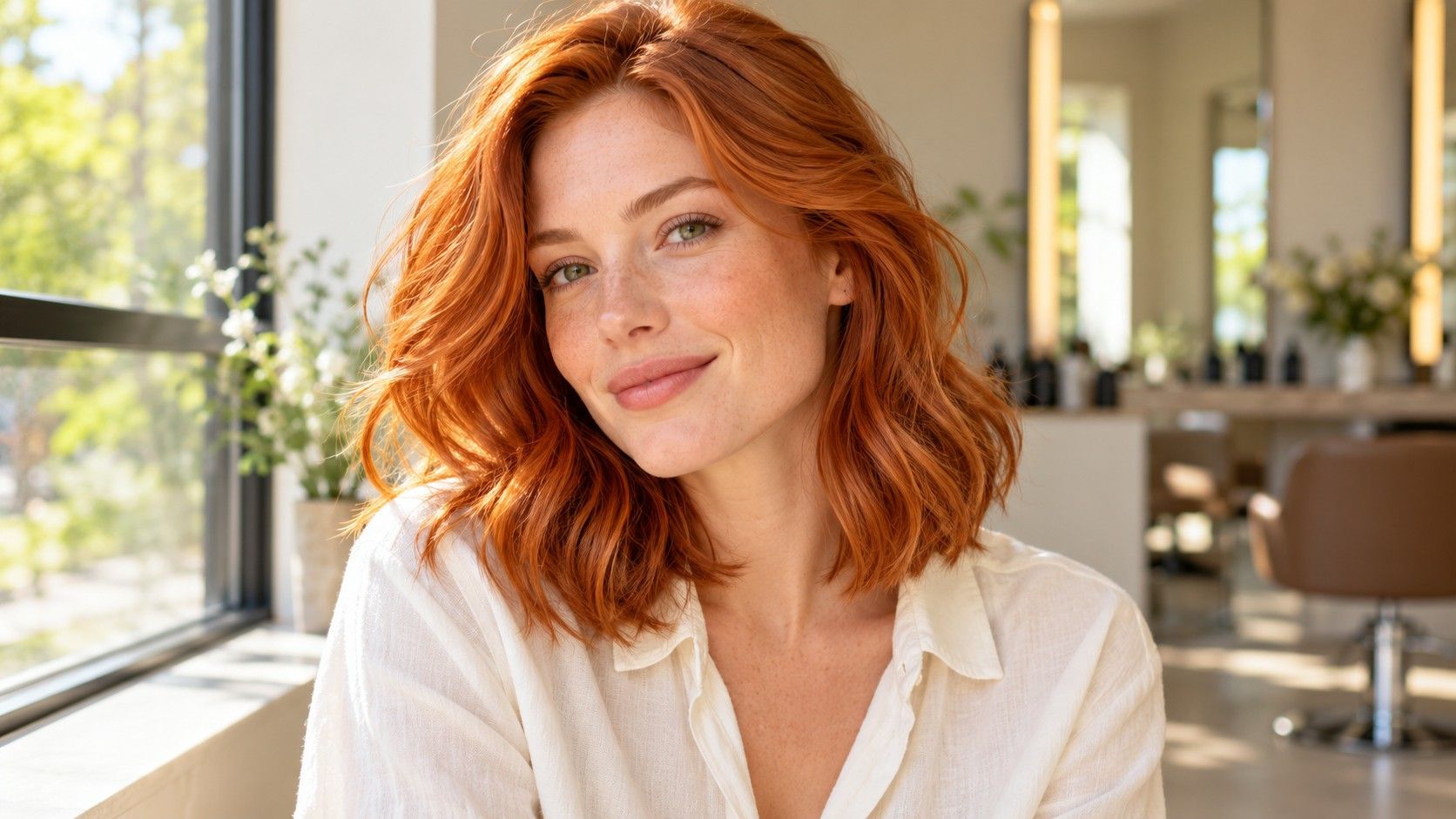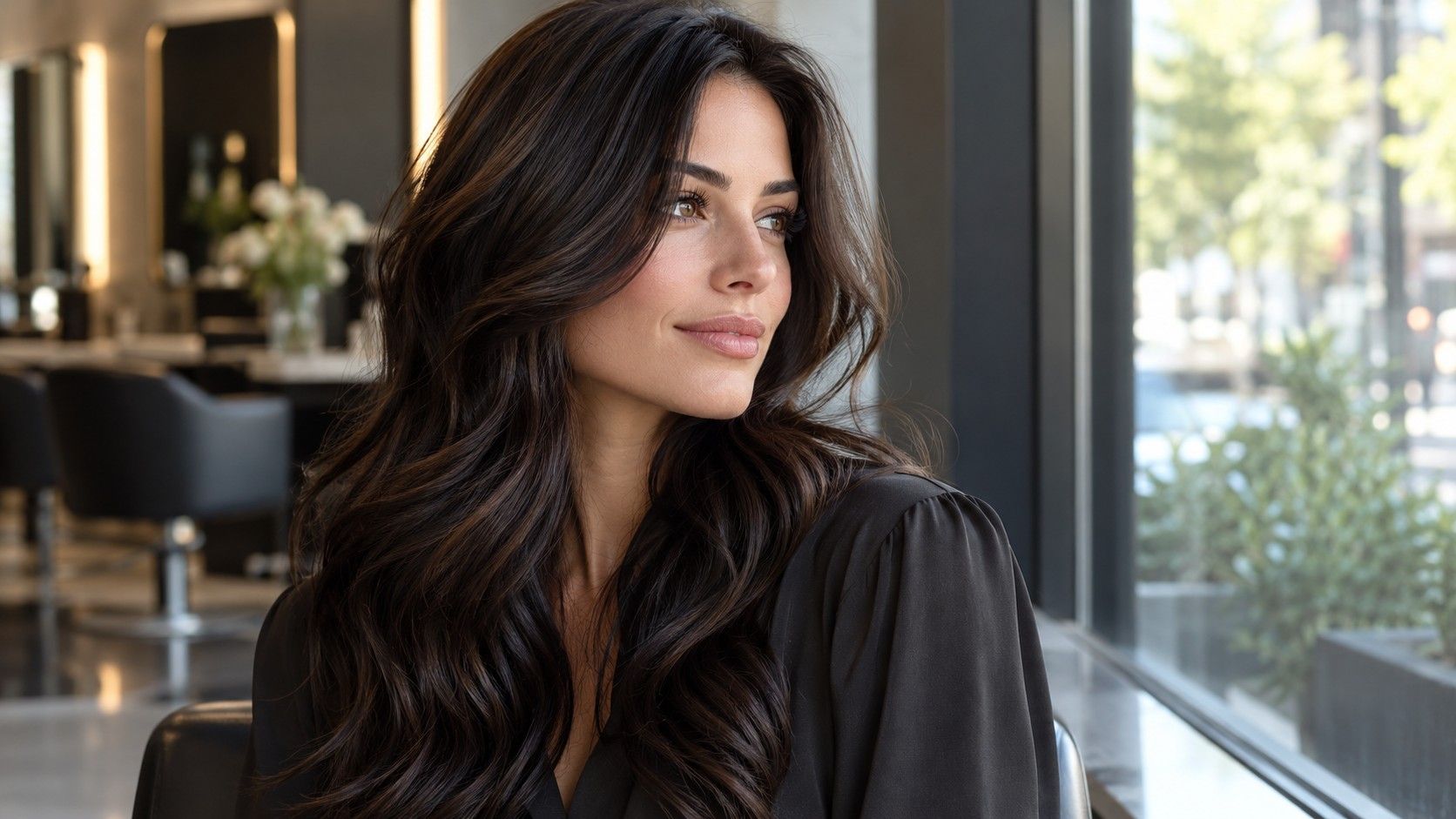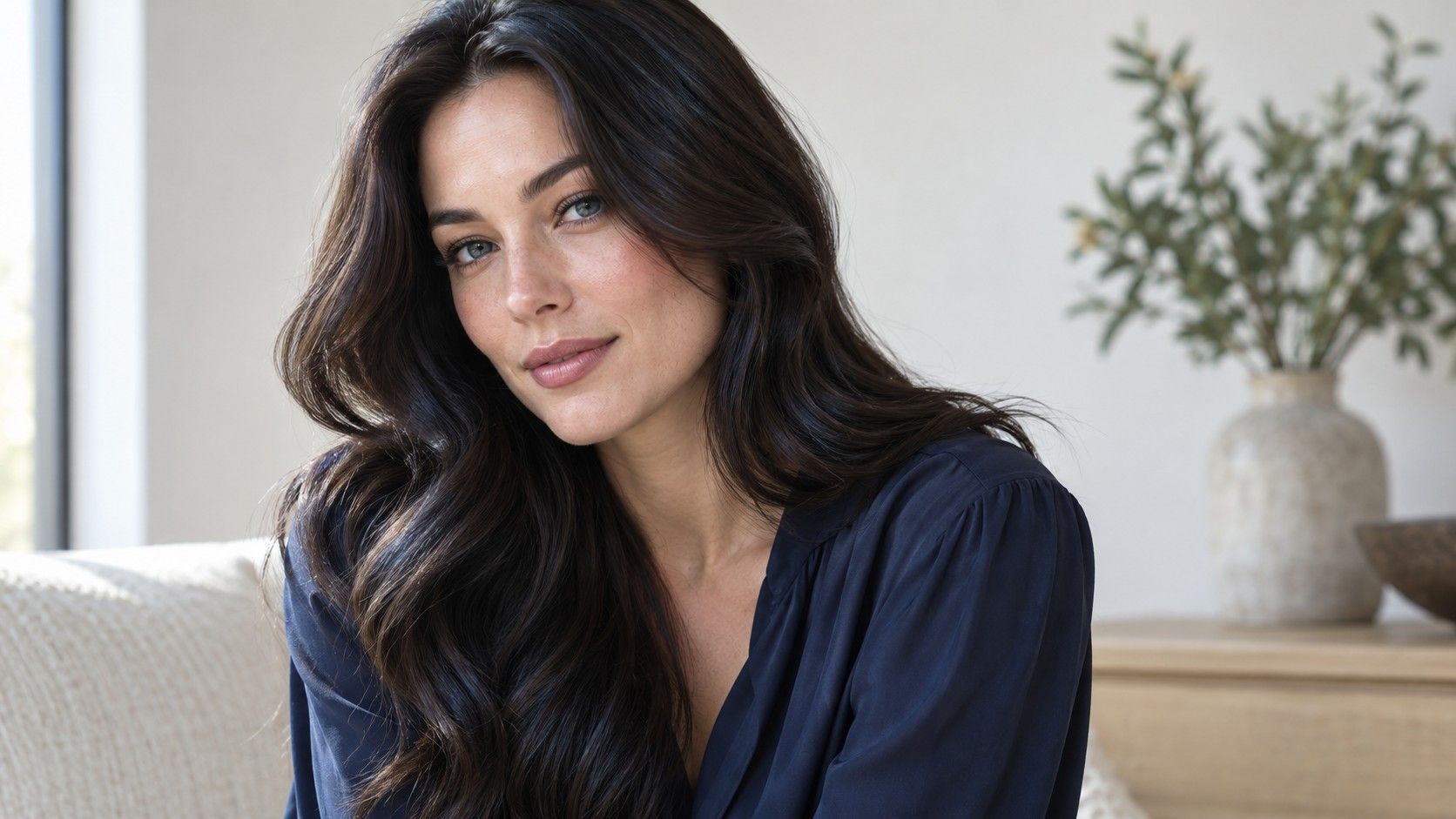
Lists of true winter hair colors often move quickly from cool brunette to black. The useful question comes before that jump: how much darkness do you actually want around your face? True Winter is a styling category used in seasonal color analysis, with coolness and clear contrast as common reference points. It is not a diagnosis or a requirement to dye your hair. I would use the palette to organize comparisons, then choose a depth and tone that make sense with your natural roots, preferences and willingness to maintain the result. Depending on the seasonal system, True Winter and Cool Winter may be overlapping names; the comparison here focuses on the appearance of individual shades.
Decide whether the problem is warmth or depth
If your current brown feels too orange in daylight, going much darker may seem like the obvious answer. But depth and warmth are separate features. A cooler brown at a similar depth could address the reflection you dislike while keeping the overall frame of your face familiar. A nearly black shade changes that frame much more strongly, even if both options sit on the cool side of a color chart.
Look at your roots and lengths near a window in indirect daylight. Roots may appear more neutral while the ends show old warmth or faded color. Describe those areas separately before deciding that the whole head needs a new shade. If you have previous dye, include that history when you speak to a colorist. A photograph or seasonal description cannot reveal how evenly the lengths will accept another service.
Keep one unedited photo as your baseline. Avoid a warm ceiling lamp, direct sun across the face and camera filters that smooth or brighten the skin. You do not need to establish your exact undertone from the image. You need to see whether the proposed change is mainly a reduction in red or gold reflection, an increase in darkness, or both. That distinction makes the shortlist much easier to manage.
Compare dark brown with black before choosing either
A deep brown can look almost black indoors and reveal more variation outdoors. A black result may create a firmer boundary at the forehead and temples. In a small online swatch, that difference can be barely visible; around a full face it may become the deciding feature. Compare the two on the same photo, with the same crop and exposure, rather than judging separate inspiration portraits.
Watch your eyebrows and eyes as you switch between results. Does the darker option give the definition you wanted, or does the hair dominate the face? There is no required answer for a person using the True Winter label. You might enjoy a sharp contrast, prefer a softer brunette, or want to preserve a natural mix of dark and silver strands. A palette should make those choices easier to discuss, not erase them.
I would be cautious about choosing black because a chart calls it ideal. Dark permanent dye can complicate a later move toward lighter hair. The practical implications depend on the product, the starting hair and the change you want afterward, so ask before committing. If you are unsure about maximum depth, bring a deep-brown alternative to the appointment and compare it beside the black reference.
Read cool shade names as descriptions, not formulas
Espresso, soft black, blue-black and cool chocolate are convenient labels, but they do not mean exactly the same thing across brands or salons. One espresso reference may be neutral brown; another may look nearly black. Cool chocolate can still contain visible warmth. A picture in useful light, plus a clear explanation of what you like about it, gives a colorist more to work with than the name alone.
| Direction to compare | Effect worth checking | Question for the colorist |
|---|---|---|
| Neutral dark brown | A deep frame with some visible brown reflection | Can this keep depth without looking strongly red or gold? |
| Cool espresso | A darker, cooler impression that may vary with lighting | What does this reference mean in your color range? |
| Soft black | A stronger outline with less visible brown | How would it compare with my natural root color? |
| Blue-black | A deliberate cool reflection and a more graphic effect | How visible would the cool cast be in daylight? |
| Dark hair with subtle dimension | Variation through the lengths rather than a solid block | Can placement keep the overall result dark? |
Check whether an inspiration image owes its effect to lighting or styling. A smooth blowout under strong lights can show a reflective ribbon that is less visible in ordinary air-dried hair. Likewise, a dark portrait background can hide the boundary of black hair. Save examples in more than one setting when possible, and tell the stylist which feature matters: the depth, the reflection, or the variation through the lengths.
Keep dimension only where it serves the result you want
Cool, dark hair does not have to be perfectly uniform. Small differences in depth can show movement through waves or layers, while still keeping an overall dark impression. Whether that is useful depends on your haircut, texture and desired finish. If you like a sleek, solid color, dimension is not an obligation. If a flat simulator result looks heavy, however, it is worth asking whether the issue is the shade or the absence of light and shadow.
Lighter pieces near the face change the local contrast even when most of the hair stays dark. Compare a reference with a bright face frame against one with depth maintained at the temples. Which version supports the effect you want? Seasonal examples can be helpful here, but they cannot settle the placement for your face or haircut. A few intentional pieces and a broad light band are very different requests.
Be specific about warmth in dimensional color. If you want a cool overall impression, show the colorist which golden or copper reflections you would find distracting. At the same time, leave room to discuss what is achievable on previously colored hair. The desired photograph is a visual reference; it is not evidence that your current lengths can reach that exact tone in one visit.
Check the grow-out before booking the dark transformation
Compare the proposed shade with your natural roots. Going darker can create a visible regrowth line when the natural color is lighter, and gray or white strands may show a strong contrast against a very dark base. That does not make the shade a poor choice, but it changes the maintenance conversation. Decide how much root visibility you are comfortable with and tell the stylist before the service is planned.
Ask about the ongoing result, not just the color on the day. How might warmth appear as the shade changes? What would a refresh involve, and how should the lengths be treated when the roots need attention? The answers depend on the service and your hair history. Avoid assuming that a darker shade automatically requires little upkeep or that a cool result will remain identical between appointments.
Budget includes time as well as the appointment price. If you do not want frequent visits, say so plainly. You can ask whether a color closer to your natural depth or a different coverage approach would better fit that preference. A slightly different brunette that you are happy to maintain may be a better everyday choice than a dramatic black you feel obliged to keep perfectly fresh.
Bring the palette idea and the practical limits together
Take two target pictures and one current daylight photo to your consultation. Write a short note for each target: I like this cooler reflection; this depth is enough; or I want the face frame to stay dark. Include a reference you dislike if it establishes a useful limit, such as a blue cast that feels too strong. Specific observations are easier to translate into a service than asking for a True Winter formula.
Explain your previous color, any lightened sections and the changes you might want later. If you expect to return to a lighter shade, discuss that now rather than after a dark permanent service. The colorist can assess the actual hair and explain the likely tradeoffs. A strand test or a more gradual approach may be suggested for some histories; a seasonal label cannot replace that assessment.
Choose the final shade because its depth, reflection and upkeep fit the result you want. True Winter can supply a useful vocabulary for cool, clear color comparisons. It cannot guarantee that black will flatter you, tell you how your hair will process or override a preference for your natural shade. Keep the label as a reference, and let the daylight comparison and salon conversation do the detailed work.