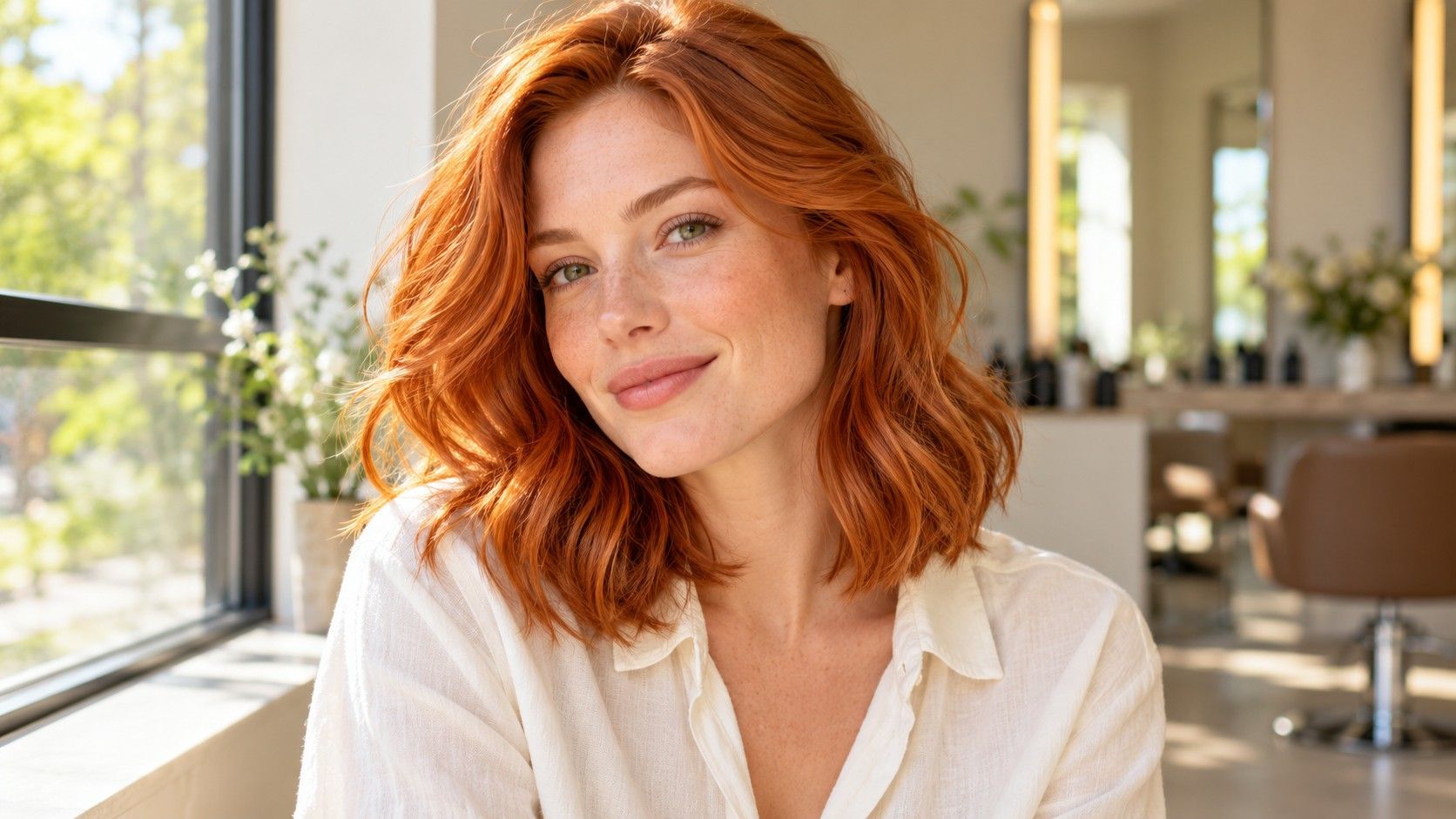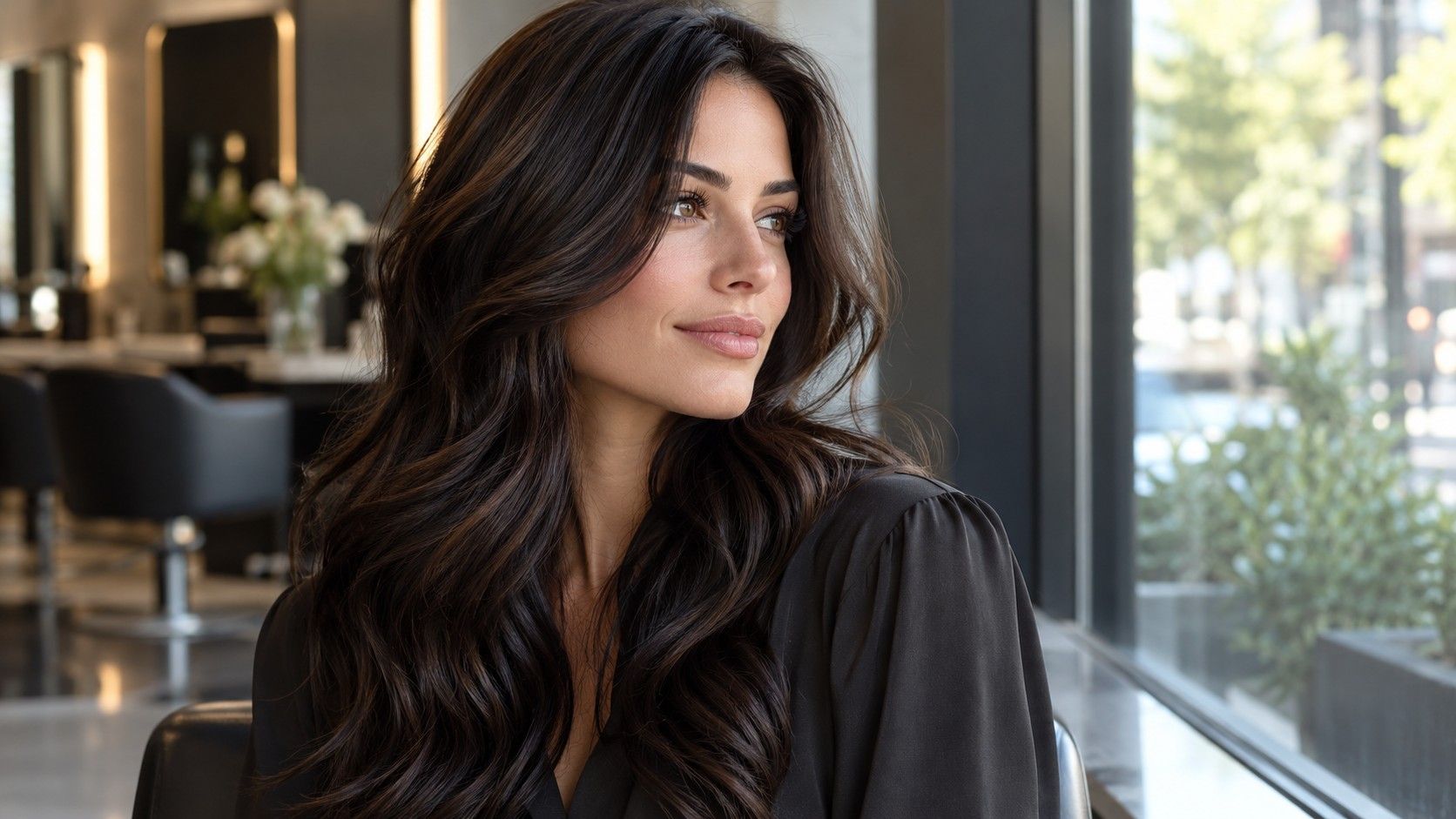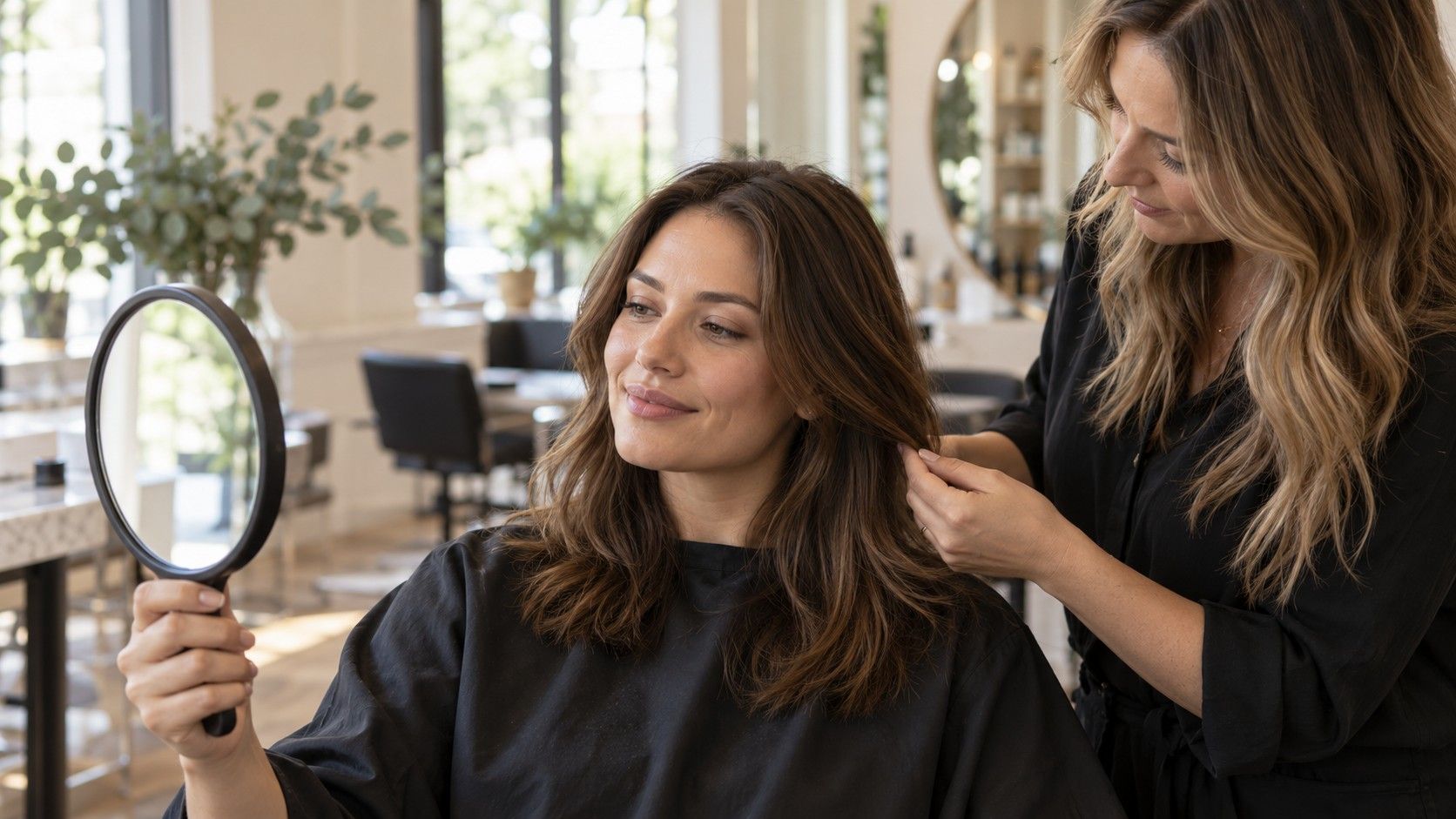
Cool summer hair colors are commonly described as cool or neutral-cool within seasonal color systems. Ash brown and cool blonde references can help you explore that direction, but a palette cannot assess previous dye or tell you how light to go. Begin with your starting depth and compare changes one at a time.
Separate a cool tone from a lighter overall color
A pale ash blonde and a cool medium brown can both appear in summer inspiration, yet they create very different amounts of contrast around the face. If you compare only those two pictures, it is hard to know whether you prefer the cool tone or the extra lightness. Keep depth similar for the first comparison: a warmer brown against a neutral-cool brown, for example.
Then compare the preferred tone at a slightly lighter and a slightly darker depth. Look at the whole face, including the brows and lips. Does the hair seem to dominate the image, or does the face remain the main focus? There is no correct answer for every person using the cool summer label. The amount of definition you enjoy is part of the choice.
I would treat words such as icy, ash and silver as prompts to examine a picture carefully. They do not describe identical colors, and a dramatic grey finish may be very different from a natural-looking cool brown. Save the image rather than the label alone. Note whether you want an obvious cool effect or simply less visible gold in the current shade.
Read the roots and lengths as separate starting points
Look at the root area in indirect daylight, without a filter or a warm bathroom lamp. Dry hair is easier to compare consistently than a mixture of wet roots and dry ends. Include a little of your neck in a photograph so the crop does not isolate the hair from the coloring around it. Describe natural hair depth in ordinary language if you are unsure of a technical level.
Now examine the lengths. Old highlights, permanent dye and recent toner may leave several different starting points along one strand. A photograph showing cool summer hair colors cannot tell you how those areas will respond to a new service. Write down what has been used and approximately when. Mention any unfamiliar home dye as well as professional color.
A darker root beside blonde ends can seem unusually deep because of the contrast. Avoid deciding on a much lighter root purely to make that first impression disappear. A softer transition or a change to the ends may address the concern. Have a colorist assess the actual depth and condition before choosing a plan that involves removing pigment.
Build a useful set of ash-brown and cool-blonde references
Find photographs where the light is reasonably neutral and the roots are visible. Look for texture and dimension rather than a perfectly uniform digital sheet of color. An outdoor image in shade can be useful, but it may also look cooler than the same hair indoors. Keep more than one view of a favored result if it is available, and do not assume every image represents untouched color.
| Reference direction | What to compare on your face | What the image cannot establish |
|---|---|---|
| Neutral-cool brown near your current depth | Whether reducing warmth is enough | How existing red or warm pigment will respond |
| Ash brown with subtle lighter pieces | Whether dimension softens the outline | The right placement for your haircut and growth pattern |
| Cool dark blonde | Whether a lighter depth still gives definition | How much preparation your hair needs |
| Pale cool blonde | Whether you actually want a large contrast change | Feasibility, condition and ongoing maintenance |
Keep one reference close to your current color even if the dramatic blonde is more exciting. That gives the consultation a practical alternative and helps identify the essential change. You might discover that the desired effect is a cooler hairline with a familiar base. You might also prefer the lighter result. Both are useful findings, provided the visual preference is kept separate from feasibility.
Test the tone in daylight and with ordinary styling
For a digital comparison, use one photograph and keep exposure unchanged. Check that the overlay has not altered skin color or added a brightening effect. If the tool blurs the hairline, examine the center of the hair for tone but avoid judging fine placement from that image. The preview can suggest a direction without being accurate enough to select a precise shade.
Wear the hair as you normally do. A side part, fringe or ponytail changes how much color sits immediately beside the face. Pale front sections may feel restrained in a salon photograph with loose waves and much stronger when the hair is tied back. Compare those arrangements before deciding that the entire head needs to be lighter.
Use your usual makeup and a familiar shirt. Pink cheeks or a temporary tan do not independently prove your undertone, and an online seasonal result is not a diagnosis. If the cool version seems uncomfortably grey, compare a neutral-cool option at the same depth. You do not have to push the tone to its coldest extreme to explore the cool summer convention.
Ask what happens when the fresh finish changes
A reference captures one moment. Ask the colorist how your proposed shade may change as it is washed and worn, what regrowth is likely to look like, and which signs mean it needs attention. The answer should relate to your starting point and service. A universal promise that ash color stays the same for a fixed number of weeks would miss too many variables.
Discuss the care routine before committing to a large change. Be honest about swimming, heat styling and how often you want an appointment. Ask which products are appropriate for your actual result and how often they should be used. A toning shampoo cannot take the place of an assessment when you dislike the color, and adding more cool pigment is not always the useful response.
If a pale option requires more upkeep than you want, compare a similar cool direction at greater depth. You may retain the aspect you liked with a different root transition. Ask how the plan could be changed later if you want to stop coloring. Considering that route now is easier than trying to solve it after several months of repeated services.
Turn the palette idea into a clear consultation
Bring a daylight picture of your current hair, two preferred directions and one image showing an effect you want to avoid. Add precise notes: “keep the brown depth,” “less gold near the face,” or “do not want silver ends.” Those phrases help prevent a broad seasonal description from being interpreted as a request for a much more dramatic change.
Ask the colorist to explain what can be done with the existing color, what needs further assessment and which part may require compromise. A strand check may be useful for a substantial change. Agree on the visual priority before discussing a formula: the same-depth adjustment and the pale-blonde transformation are different projects even if both references are labelled cool summer.
Leave with a shared description of the intended depth, tone and placement, plus a care plan you can follow. If your final shade sits between neutral and cool, that does not make the comparison unsuccessful. The palette gave you a starting vocabulary. The result still needs to work with your real hair, everyday appearance and willingness to maintain it. Save the agreed reference with your notes so a later appointment has a clear point of comparison.