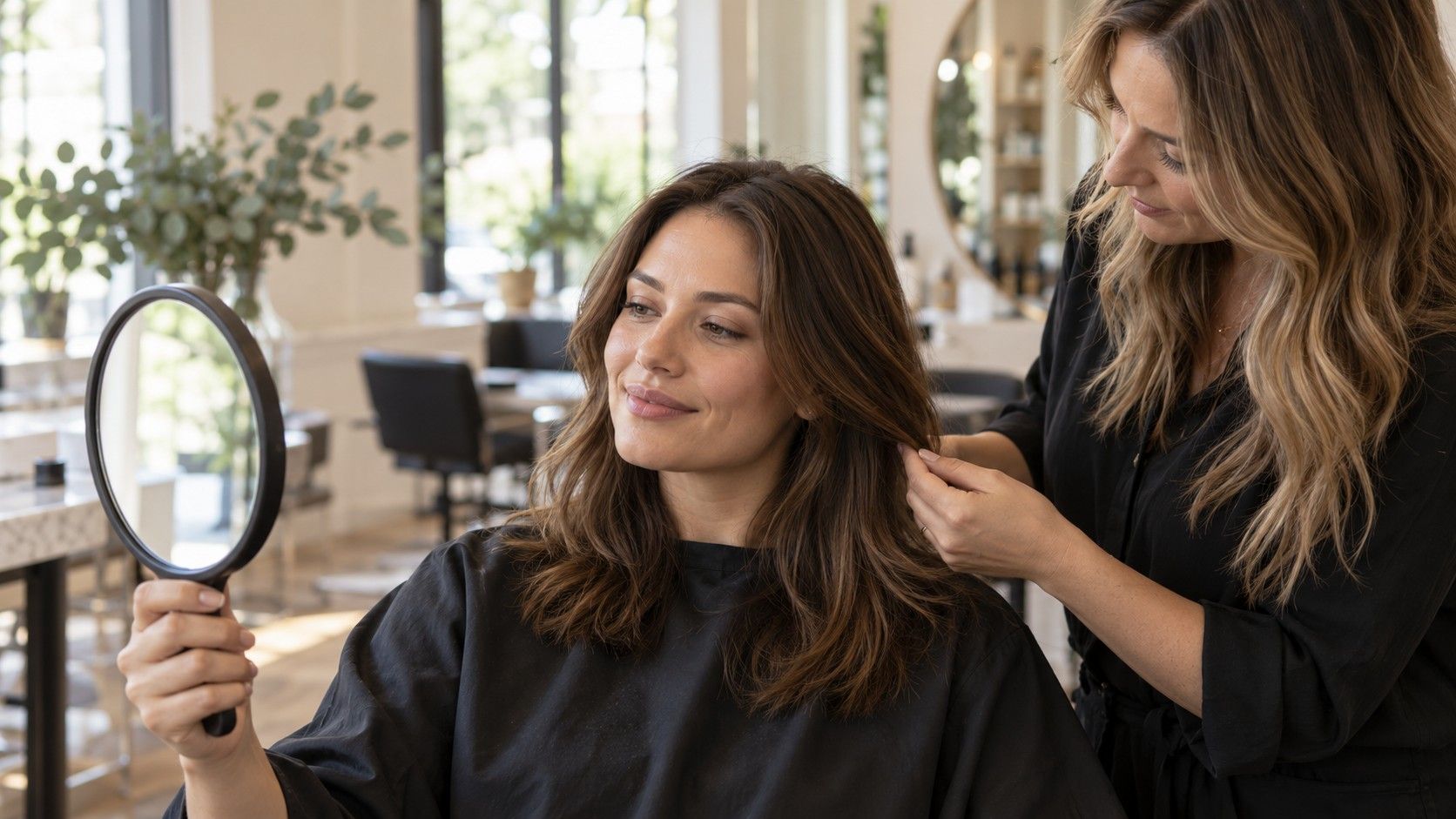
Bright Spring hair colors are often presented as a cheerful lineup of gold, copper and warm brown. Choosing among them takes more than deciding which swatch looks lively. A pale golden blonde, a clear copper and a deeper warm brunette change the contrast around a face in very different ways. Bright Spring is a styling convention within seasonal color analysis, not a diagnosis. I would use its warm, clear color direction as a starting point, then compare actual shades against your natural depth, everyday appearance and maintenance plans.
Find out whether you want warmth, brightness or lightness
These three qualities are easy to confuse. Warmth describes a gold, copper or reddish direction. Lightness is the difference between a pale blonde and a deeper brown. Brightness, in seasonal styling discussions, usually refers to a clear or vivid impression rather than an automatically lighter color. A warm brunette can look clearer and more defined than a pale, muted blonde, depending on the shade and the person wearing it.
Look at a daylight photo of your current hair before browsing options. What seems missing: a warmer reflection, more definition around the face, or lighter pieces that show movement? Write down one answer first. If you change everything at once, a beautiful inspiration picture can lead you toward a service that solves a different problem from the one you started with.
Natural roots provide a useful depth reference even when the lengths are dyed. If your roots are much deeper than a blonde you already wear, consider whether you enjoy that contrast or keep trying to hide it. Neither preference proves a seasonal type. It does tell you something practical about the result you want and how a new shade might feel once the roots begin to show.
Compare warm brown before making a large jump to blonde
If your natural hair is brown, start by comparing a neutral brown with a warmer version at a similar depth. Then compare that warm brown with a lighter alternative. Holding depth steady for the first comparison lets you see the effect of warmth alone. A rich golden-brown reflection might provide the change you wanted without making the whole head substantially lighter.
Use one unchanged portrait in indirect daylight for virtual comparisons. A yellow room light can exaggerate warmth, and direct sunlight can make brown hair look much more golden than it does during an ordinary day. Keep the face exposure and crop identical between results. When one image has brighter skin, it becomes difficult to tell whether you prefer the hair color or the more flattering photograph.
Notice how the hair relates to your eyebrows and eyes. Does a lighter result leave the face with the definition you like, or do you prefer some depth near the hairline? A Bright Spring label does not require blonde hair. If a warm brunette looks balanced and a pale blonde feels disconnected, you can keep the depth and explore warmth through reflection or placement instead.
Choose between gold and copper with a controlled comparison
Gold and copper are both warm directions, but they create different impressions. Gold may read as yellow or honey; copper brings a more orange-red component. Marketing names blur those boundaries, so gather references rather than relying on a label such as caramel or strawberry. Point to what you see: more golden than red, a clean copper reflection, or a warm brown that still reads brown.
Compare two options at a similar depth and intensity if possible. A muted honey blonde beside a highly vivid copper changes too many features at once. If the copper feels exciting, try to identify whether you like its warmth, its saturation or its stronger contrast with the face. A quieter copper or warmer brunette could preserve the part you like while reducing the commitment.
| Shade direction | What to compare around the face | Useful salon question |
|---|---|---|
| Golden brown | Warm reflection while retaining a deeper outline | Can the result stay clearly brown in everyday light? |
| Honey or golden blonde | Less depth, with a visible gold direction | How light would this need to be from my starting color? |
| Clear copper | A more noticeable orange-red impression | What level of vividness and upkeep would this involve? |
| Strawberry blonde | A lighter result with a delicate red-gold balance | How would this reference translate onto my existing hair? |
| Warm dimensional brunette | Variation through the lengths with depth retained | Where would lighter pieces create the effect I want? |
Check the reference in context. Warm lipstick, a golden background and a glossy blowout can all reinforce the effect of a warm shade. Those choices may be lovely, but they can obscure how much of the appeal comes from the hair itself. Include at least one reference with ordinary lighting and a hairstyle close to the way you usually wear yours.
Decide how much vivid color you want to see every day
Clear color can be appealing without being highly saturated. Bright Spring examples sometimes encourage very vivid copper, but you may prefer a gentler warmth that still looks fresh and distinct. Picture the result with your normal clothes and minimal styling. If the hair would become the strongest color in every outfit, decide whether that is part of the appeal or a distraction you would tire of.
Try the proposed direction near the face before settling on an all-over interpretation. A virtual edit can help compare broad effects, though its masking and color accuracy have limits. A physical hair swatch used during a consultation may add another reference. Neither method predicts the exact processed result. Use them to identify a preference for softer warmth, a stronger copper direction or more retained depth.
Natural texture matters to the impression as well. A smooth, reflective photo can make highlights look like continuous ribbons, while curls distribute light and shade differently. Ask to see examples on a texture closer to yours if possible. Tell the stylist how often you straighten, curl or air-dry your hair so the color placement can be discussed in the context of your actual routine.
Plan for roots and fading before choosing the final shade
A warm shade close to your natural depth may grow out differently from a much lighter blonde or a vivid all-over copper. The degree of contrast at the roots, the coverage approach and the placement all affect what you see between appointments. There is no single schedule attached to the Bright Spring palette. Ask for maintenance advice based on the specific service being proposed.
If you have previous dye or lightened ends, tell the colorist where it is and what you remember using. Warm shades can look uneven when different areas start from different colors or conditions, and a photo cannot establish what your hair can tolerate. A stylist may suggest testing a strand or adjusting the plan. The objective is an achievable result with a clear explanation of the first step.
Ask how the intended tone might change as it fades and what a refresh would involve. Do not choose a vivid shade on the assumption that it will stay exactly as shown in the reference. Likewise, avoid treating extra warmth that appears during lightening as the final target simply because the palette is warm. Intentional gold or copper still needs a considered balance and an agreed result.
Bring a clear preference rather than a seasonal prescription
Prepare a small shortlist: one shade close to your present depth and one more adventurous direction. Add your current daylight photo and a sentence about each target. You might write that you want gold without a strong red cast, or that you like copper but want to retain deeper roots. These notes communicate choices that a color chart cannot make on your behalf.
Discuss the first appointment, later upkeep and any future changes you are considering. If you want to alternate between a warmer brunette and a lighter result, mention that before agreeing to a service. Your hair history and the colorist's assessment determine the practical options. The seasonal name can help explain an aesthetic preference, but it does not supply a formula or guarantee a particular outcome.
Keep your own response in the decision. If a recommended shade looks too yellow to you, say so; if you prefer the depth of your natural hair, preserve it. Bright Spring can be a useful framework for exploring warm, clear color. The useful final choice is the one whose depth, reflection and upkeep work together in your daily life, with a salon plan that respects your actual starting point.