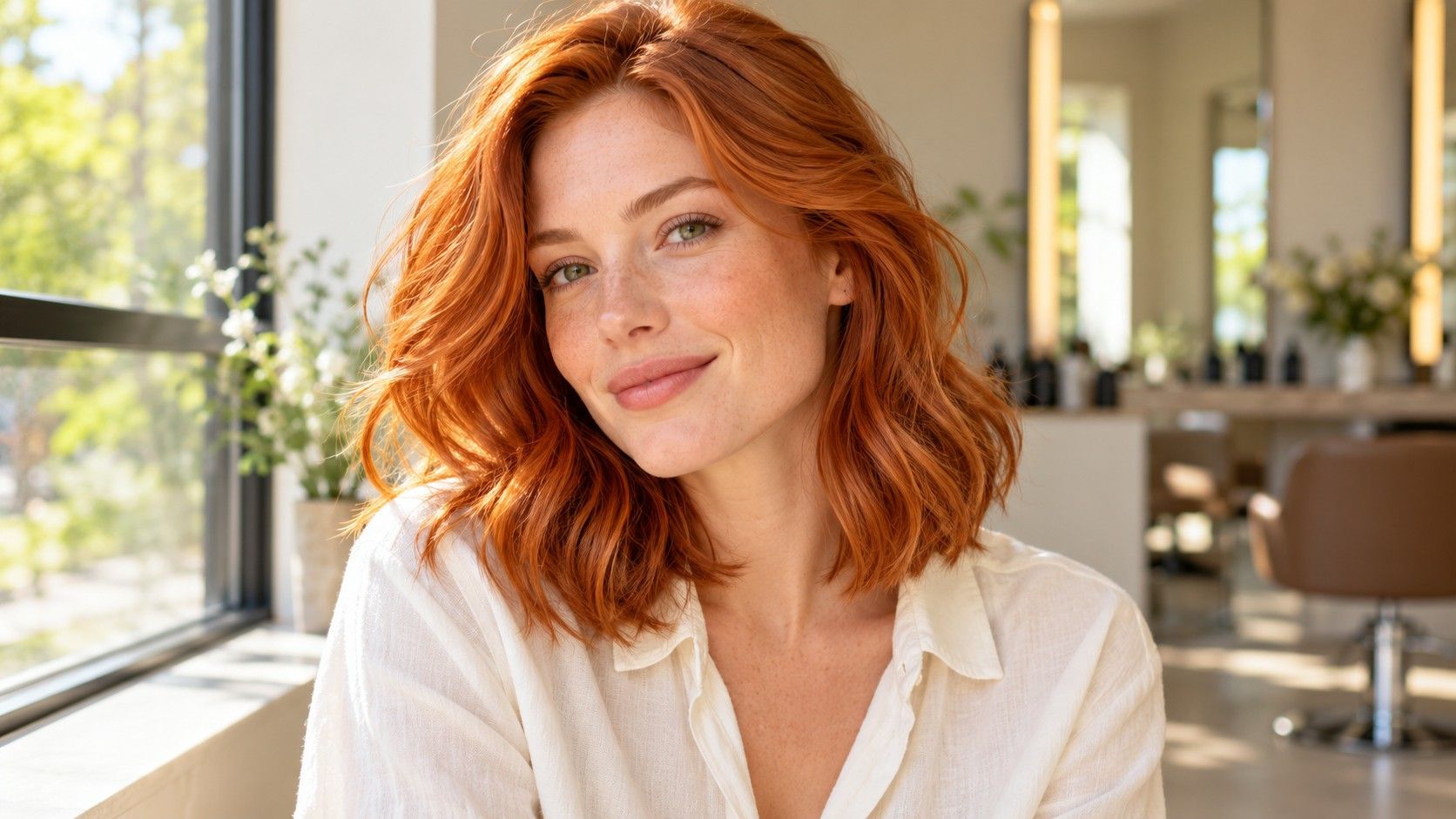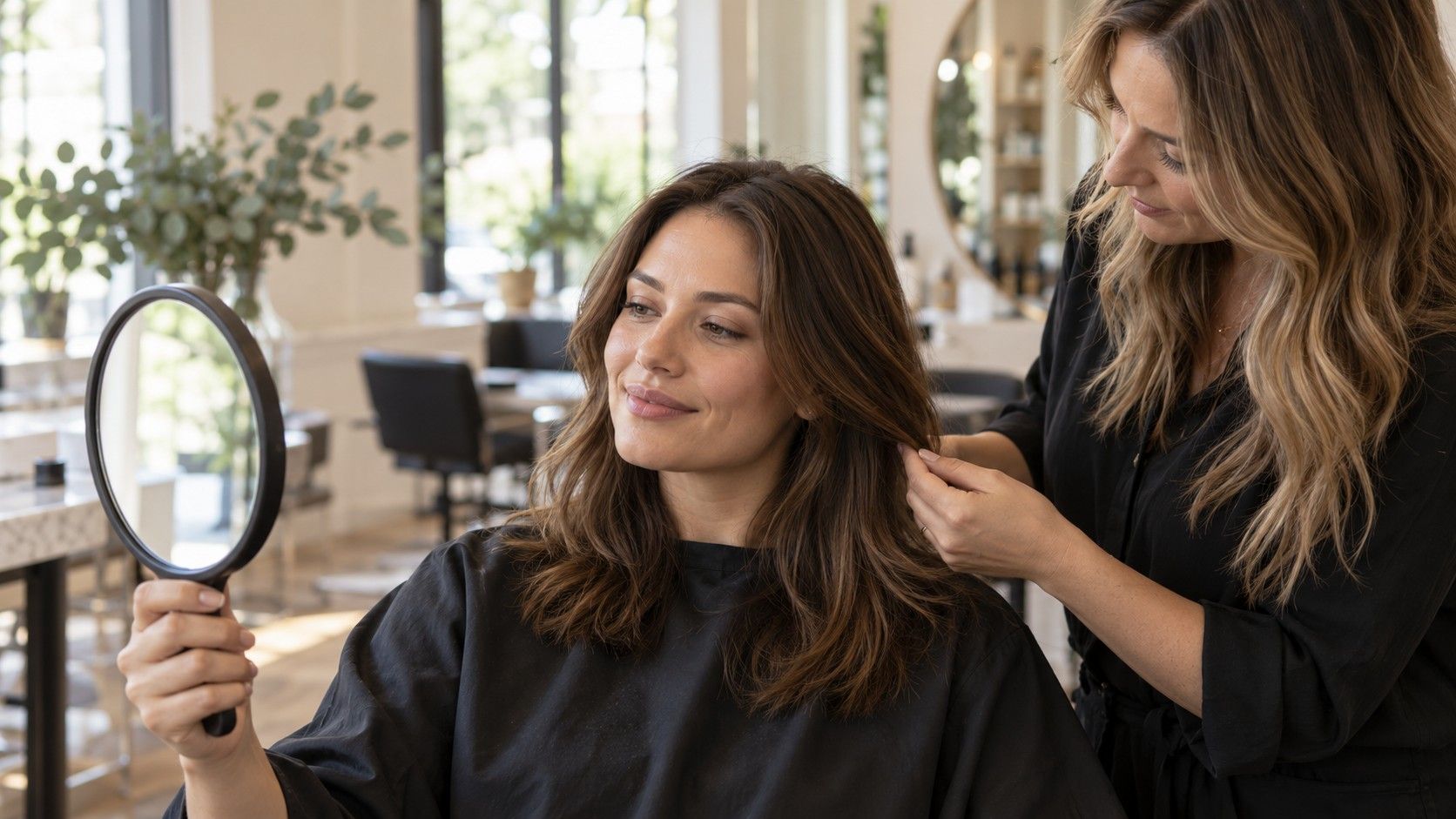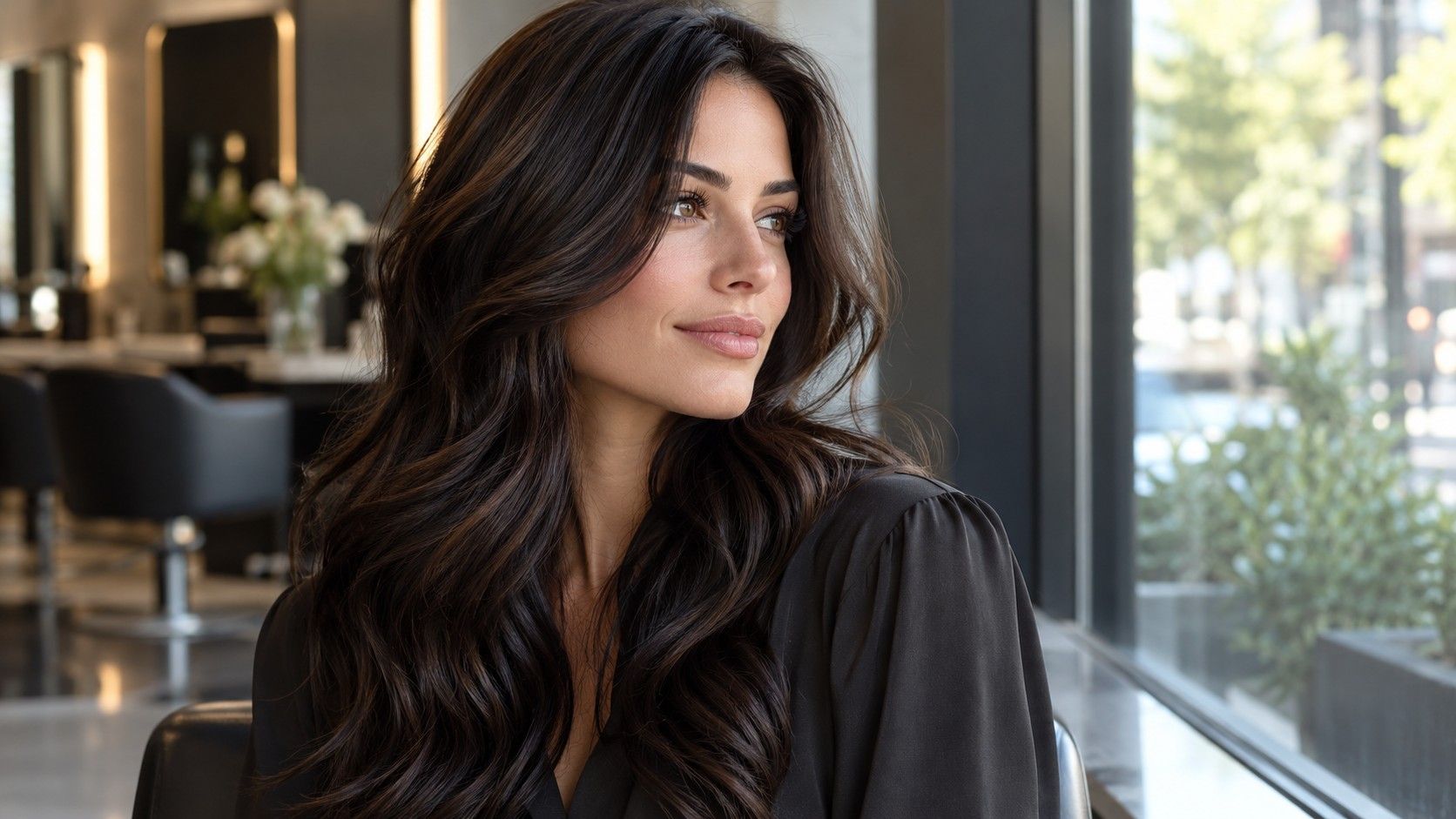
Cool Winter hair colors often appear in very dark or icy reference photos, yet a cool tone alone does not settle the choice. I would first compare the depth around your face, then look at undertone, your existing color and the maintenance behind the result.
Use the Winter label as a direction, then look at your hair
Cool Winter belongs to a family of styling systems that organize colors by qualities such as temperature, depth and clarity. It is often associated with cooler, clearer colors and a noticeable contrast. That convention can help organize reference photos. It does not diagnose your undertone, require black hair or override your own preference for how much contrast you want around your face.
A list of cool winter hair colors can jump quickly from dark brown to blue-black or pale silver. Those options create very different relationships with skin and eyebrows, despite sharing a cool label. I would choose a useful range of depth before worrying about the last trace of warmth. Otherwise it is easy to select an undertone you like in a shade that feels far too heavy or too pale.
Start with a recent unfiltered portrait and look at the roots rather than the sunlit ends. Note whether your brows are lighter, similar or deeper in appearance. This is an observation, not a rule that every feature must match. It gives you a starting point for deciding whether you want a small adjustment or a deliberate change in contrast.
Compare dark brown and near-black before selecting an undertone
Place a deep brown reference beside a near-black one. Use similar lighting and framing where possible, or compare two previews built from the same portrait. Look first at the edge beside your temples and jaw. Near-black may create a sharper outline; dark brown may leave more visible variation. Ask which relationship you prefer before deciding whether either should look cooler.
Inspect the full portrait at normal size. A crop of glossy hair can make every dark shade look appealing, but the decision concerns your whole face. Do your eyes still draw the attention you want? Do the brows seem unexpectedly light? Are you depending on stronger makeup to make the new depth feel balanced? These are useful preference checks, without turning the result into a seasonal typing test.
If both options feel heavy, test a slightly lighter brown rather than adding more blue or ash to the darker one. Undertone cannot always solve a depth mismatch. Equally, if a medium brown feels too close to the face in apparent lightness, a deeper reference may give the definition you wanted. Keep the comparison limited enough to explain what changed.
Separate a cool brown from a visibly blue effect
Cool can describe several impressions in a hair reference. One brown may simply have less obvious copper or gold, while another carries a pronounced smoky cast. A blue-black photograph can show an actual colored sheen, or a strong reflection exaggerated by light and editing. Describe what you see rather than assuming that all three mean the same request in a salon.
Use two images at similar depth to compare temperature. Look at a neutral-looking dark brown beside a cooler version, and decide whether the difference matters to you. Words such as espresso, ash and raven are loose reference labels rather than portable formulas. Save the actual image and specify whether you want less red, a cooler overall impression or an intentionally visible blue tone.
I would be cautious about treating every warm reflection as a flaw. Real hair viewed in bright light can reveal variation that a studio photograph conceals. The practical question is whether the overall impression bothers you in normal conditions. Trying to eliminate every trace of warmth from every photograph is a different and often less useful goal than choosing a shade you enjoy wearing.
Check the roots and old color before planning a change
Natural hair depth and previous dye affect the route to a reference. A digital preview can turn light ends into a seamless dark curtain or paint silver over dark lengths in a moment. It cannot show whether the real starting hair will take color evenly, how a previously lightened area will behave or what work would be needed to move lighter later.
Tell the salon about permanent color, highlights, bleach and other relevant treatments as accurately as possible. Bring a daylight photo showing roots and lengths if they differ. If you do not know the full history, say so rather than guessing. A colorist can then discuss what assessment or preliminary checks are useful before committing to a process.
Do not choose a very dark result on the assumption that reversing it will be simple. Ask what a later change would involve for your hair, especially if you are still attracted to blonde references. Similarly, a pale cool option is not just another setting on the same plan. Its feasibility and upkeep need their own conversation, separate from whether the palette label makes it sound suitable.
Give the comparison steady light and a plain background
A warm lamp can make a brown look more golden, while a dim photograph can collapse dark strands into one black area. Take a portrait near a window in indirect light with your face towards the light. Avoid a bright window behind you and turn off nearby lights that cast a different tint. Check that the roots and the darkest sections still show texture.
Keep camera angle, makeup and clothing reasonably consistent. A dark high collar or a bright lipstick can alter the balance of the portrait. That may be how you normally dress, which is useful context, but it should not vary randomly between shade comparisons. A second simple portrait can help you see whether a preference depends entirely on a dramatic styling choice.
After choosing a direction, inspect it under another ordinary condition. Use one screen for the main comparison and check whether a night setting is changing its color. If the chosen brown becomes almost featureless in the second image, examine exposure before rejecting it. Photographs and screens are aids for a conversation; neither provides a final reading of how real hair behaves in every room.
Think about regrowth and fading while the shade is still an idea
A deep shade close to your natural root color may offer a different grow-out experience from near-black over much lighter roots. The exact result depends on the starting hair, coverage, technique and your tolerance for visible change. Ask the stylist to describe the likely transition as roots appear. A fresh salon photograph cannot answer that question on its own.
If gray coverage is part of your goal, mention it before the color plan is chosen. Ask how that requirement affects the finish and maintenance instead of assuming a cool brown reference includes it. Likewise, say whether you prefer uniform color or visible dimension. A deep base with lighter pieces can look very different from a solid dark result, even when both are called brunette.
Talk about how the proposed shade may change between appointments and what care is appropriate. Avoid choosing a generic toning routine from the seasonal name. Ask the salon for instructions suited to the actual process and products used on your hair. The right amount of upkeep is the amount you are willing to follow, rather than an ideal routine that stays on paper.
Bring a depth decision and two references to the salon
A practical shortlist might include one deep neutral-looking brown and one slightly cooler version at similar depth. Another might compare dark brown with near-black. Keep those as separate decisions rather than asking a stylist to choose among ten images ranging from silver to blue-black. Explain which difference you are trying to resolve and which features of your current hair you want to retain.
Use plain language in the request: more definition around the face, less visible copper, enough variation for the lengths to retain texture, or a deliberately strong dark edge. Bring an original photograph with any virtual versions and identify the artificial parts. A smooth mask over the hairline or an impossible shine should not become an accidental part of the request.
Ask what can be achieved from your current starting point, what remains uncertain and how the result would be maintained. Then make the final choice with those answers in view. Cool Winter is a useful shelf for collecting ideas; depth, placement and your real hair history make those ideas specific. You can stop comparing when the visual preference and practical plan both feel clear.