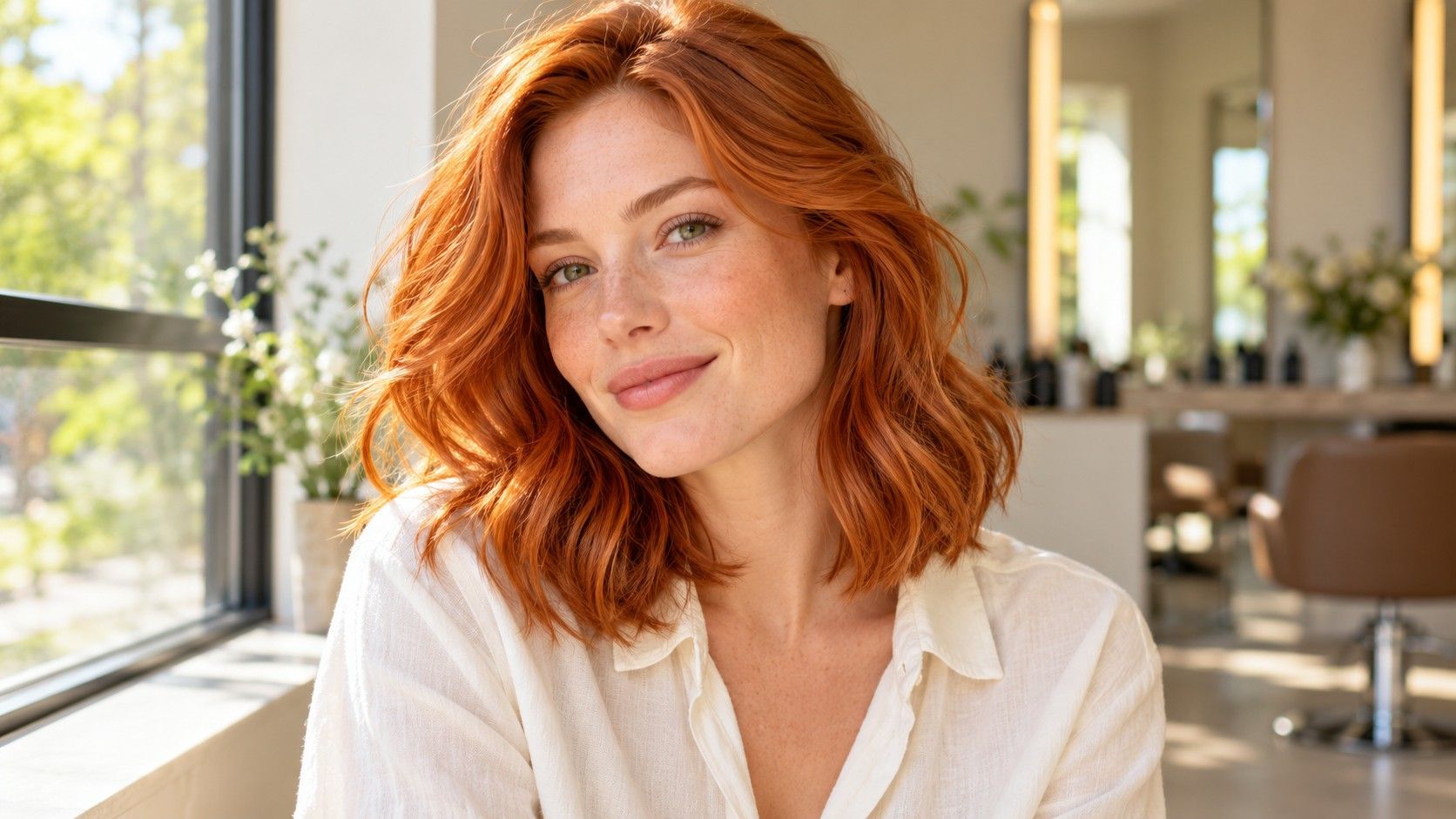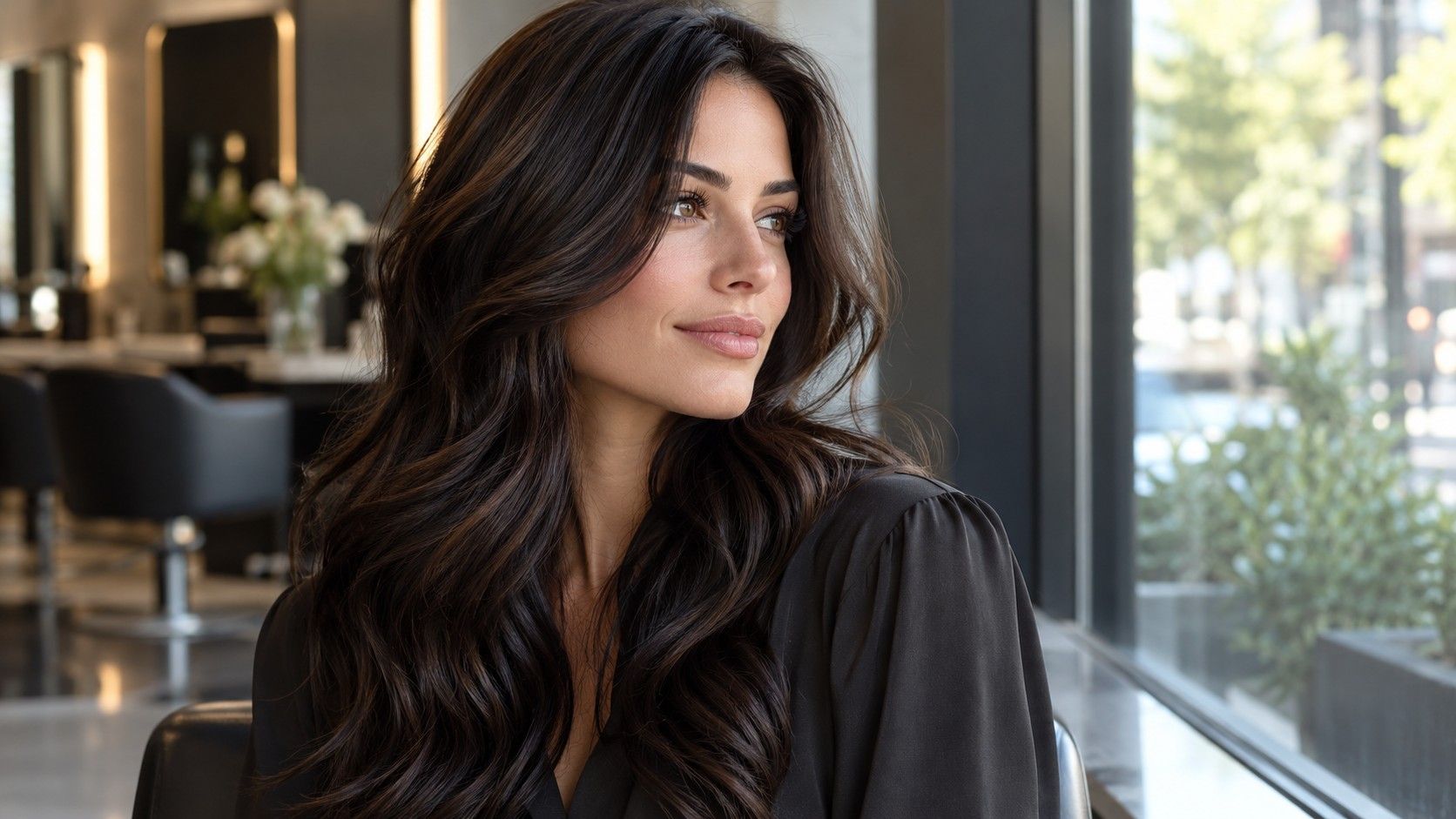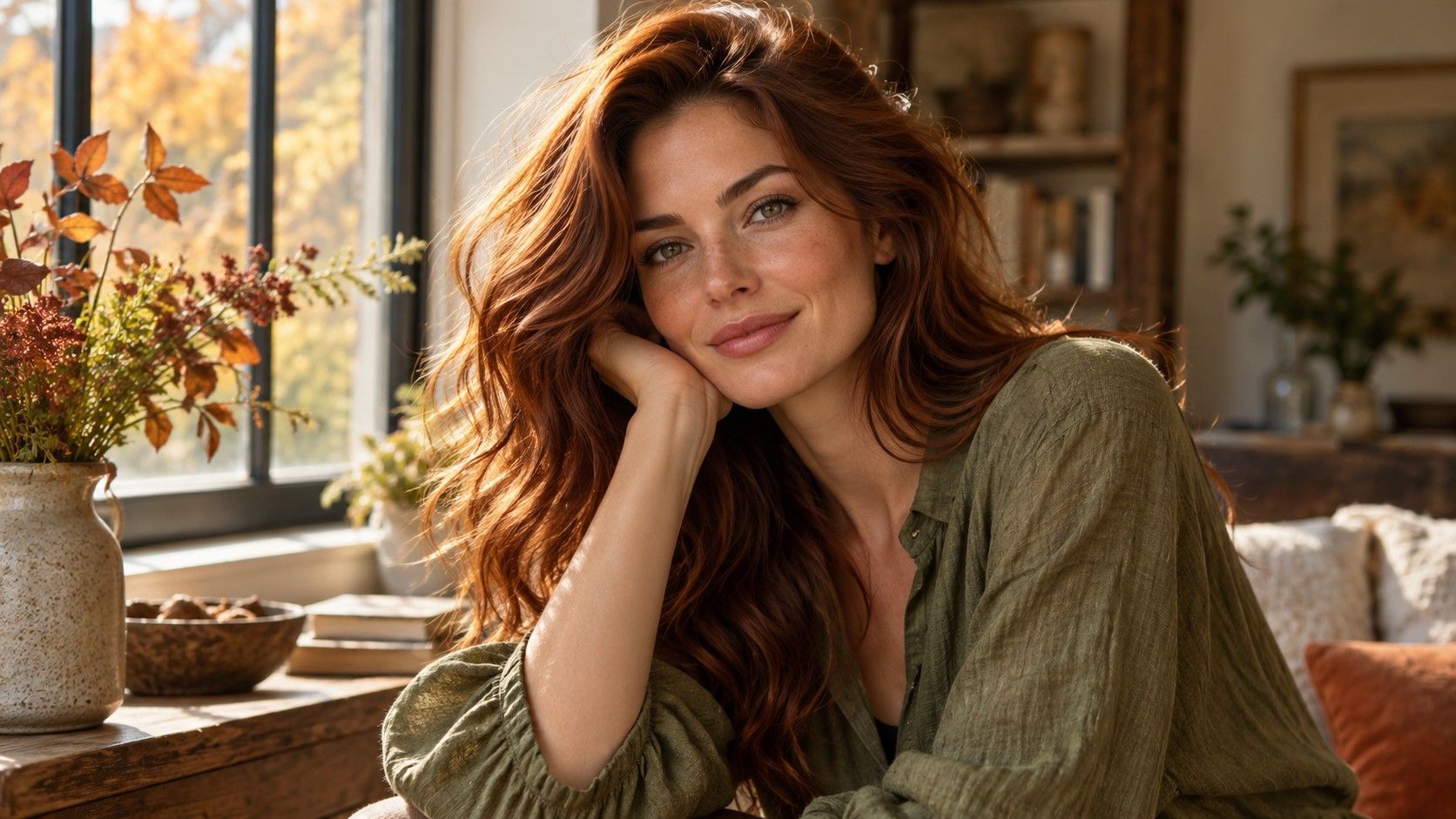
True autumn hair color references often feature warm browns, copper and golden accents. The seasonal label can help you gather ideas, but it cannot choose the amount of warmth you will enjoy. Start with your current depth, compare a restrained warm brunette with a clearer copper direction, and keep the practical consequences beside the pictures.
Decide how visible you want the warmth to be
A brown with a warm reflection and an obvious copper can both appear in an autumn gallery, yet they make different statements. Before choosing a reference, decide whether you want the color to read as brown in most settings or whether you want people to notice the red or orange direction immediately. That question is easier to answer than finding the single shade that supposedly belongs to your season.
Use two images at a similar depth for the first comparison. Look at the root area as well as the bright ends. A sunny photograph can make a brunette appear much more copper than it looks indoors, while a shaded picture may hide the warmth. If you can find several views of the same result, keep them together. A single glowing image is a weak guide to an everyday appearance.
I would write down the specific feature that attracts you: a soft golden reflection, copper around the face or a rich brown base. Those details separate a realistic preference from the atmosphere of the reference photograph. Seasonal systems are styling conventions, and their definitions vary. You can use the true autumn idea without treating every warm shade as automatically suitable.
Check your base before planning a warm change
Examine natural regrowth in indirect daylight with dry hair. Describe the roots and lengths separately, especially when highlights make the ends much lighter. The contrast between them can make the roots look unusually dark. Include a photograph of the whole head rather than a close crop of the brightest section, so the starting point remains clear.
Bring a record of previous permanent dye, lightening and recent toning. Include approximate dates and mention unfamiliar home color. Different parts of the hair may contain different pigment histories, even when they look similar in a small image. A warm reference does not reveal how evenly those areas will respond or whether a larger change is sensible for their condition.
If you like your current depth, keep it in the shortlist. Adding a visible warm direction does not necessarily mean choosing a lighter overall appearance. You may prefer a similar brown with different reflections or selected warmer pieces. The technical route needs an assessment of the actual hair, so describe the visual result first and let the consultation establish what it involves.
Compare warm brown, auburn and copper as distinct options
Shade names are loose descriptions. One collection may call a result chestnut while another uses auburn for something similar. Compare the photographs directly and say how much brown, red or copper you want to perceive. The vocabulary becomes more useful when it is attached to an image with visible roots, texture and reasonably neutral lighting.
| Direction | What to look for | Question worth asking |
|---|---|---|
| Warm brunette | A brown base with restrained warmth | Will the warmth be visible indoors or mainly in strong light? |
| Auburn-leaning brown | A more noticeable red-brown impression | How will the result relate to my existing pigment? |
| Clear copper | A stronger orange-red direction near the face | What upkeep and fading pattern should I expect? |
| Warm accents in a familiar base | A smaller change through selected sections | Where will those pieces show in my ordinary hairstyle? |
The table helps organize a discussion; it does not prescribe a color. Save one subdued and one stronger option if you are undecided. A colorist can explain which differences are achievable from your starting point. Do not assume that a name on a box or in an app will recreate the reference. The same label can cover different depths and different proportions of warmth.
See how the color behaves around your face
Arrange the hair as you wear it on an ordinary weekday. If it is usually tied back, check the hairline and temples in that arrangement. Bright pieces near the forehead can make a much stronger impression than warmth placed farther down the lengths. A reference with waves may distribute the color differently from your straight or tightly curled style.
Compare the options with your usual makeup and several familiar tops. A neutral shirt and a color you wear often are enough to begin. Warm autumn inspiration frequently includes rust or olive clothing, but wearing those colors for the test should be a choice, not a requirement. The shade needs to make sense with your own wardrobe rather than a carefully assembled mood board.
Look beyond whether the skin seems warmer. Ask whether you like the balance between hair, brows and eyes, and whether the color feels comfortable without extra makeup. If copper seems too strong, try a more brown-based reference at a similar depth before deciding the whole warm direction is wrong. If brunette feels too quiet, keep the stronger option and discuss its practical demands.
Ask about the weeks after the fresh color
A warm color can change in appearance as it is washed and worn. Ask how your specific result is expected to evolve, what the regrowth may look like and how it could be refreshed. There is no single appointment schedule that applies to every copper or autumn brunette. Starting pigment, technique and the chosen finish all affect that answer.
Tell the colorist how often you want appointments and what your routine actually includes. Swimming, frequent heat styling and a preference for low-effort care are useful details. Ask which products fit the service and how you should judge whether the color needs attention. Adding a warm-tinted product at home without a clear plan can move the result away from the reference you agreed on.
Consider a delayed appointment as a realistic scenario. Would visible roots bother you? Would a quieter brown base feel easier than an obvious all-over copper? Ask how either choice could be adjusted if you wanted a smaller change later. You are choosing the ongoing appearance as well as the first photograph, so the maintenance conversation belongs before the final decision.
Take a clear preference to the consultation
Bring two preferred images, an unfiltered daylight photo of your current hair and one example of an effect you want to avoid. Mark what matters in each reference. “Brown first, copper second” is different from “visible copper with darker roots.” “No very pale front pieces” also gives a useful boundary. Clear observations reduce the ambiguity of the seasonal label.
Ask what is realistic with your color history and condition. A substantial change may require further assessment before a process can be agreed. Discuss whether depth, warmth or placement is the priority, especially when your favorite image changes all three. You may choose to keep one feature familiar so the new result still feels comfortable in daily life.
Finish with a shared description of the intended result and a care plan you can manage. Keep the agreed pictures and notes for the next appointment. True autumn is a starting point for exploring warmth, not a promise that every copper will work or that brown is too cautious. The useful choice is the one you understand well enough to request and maintain.