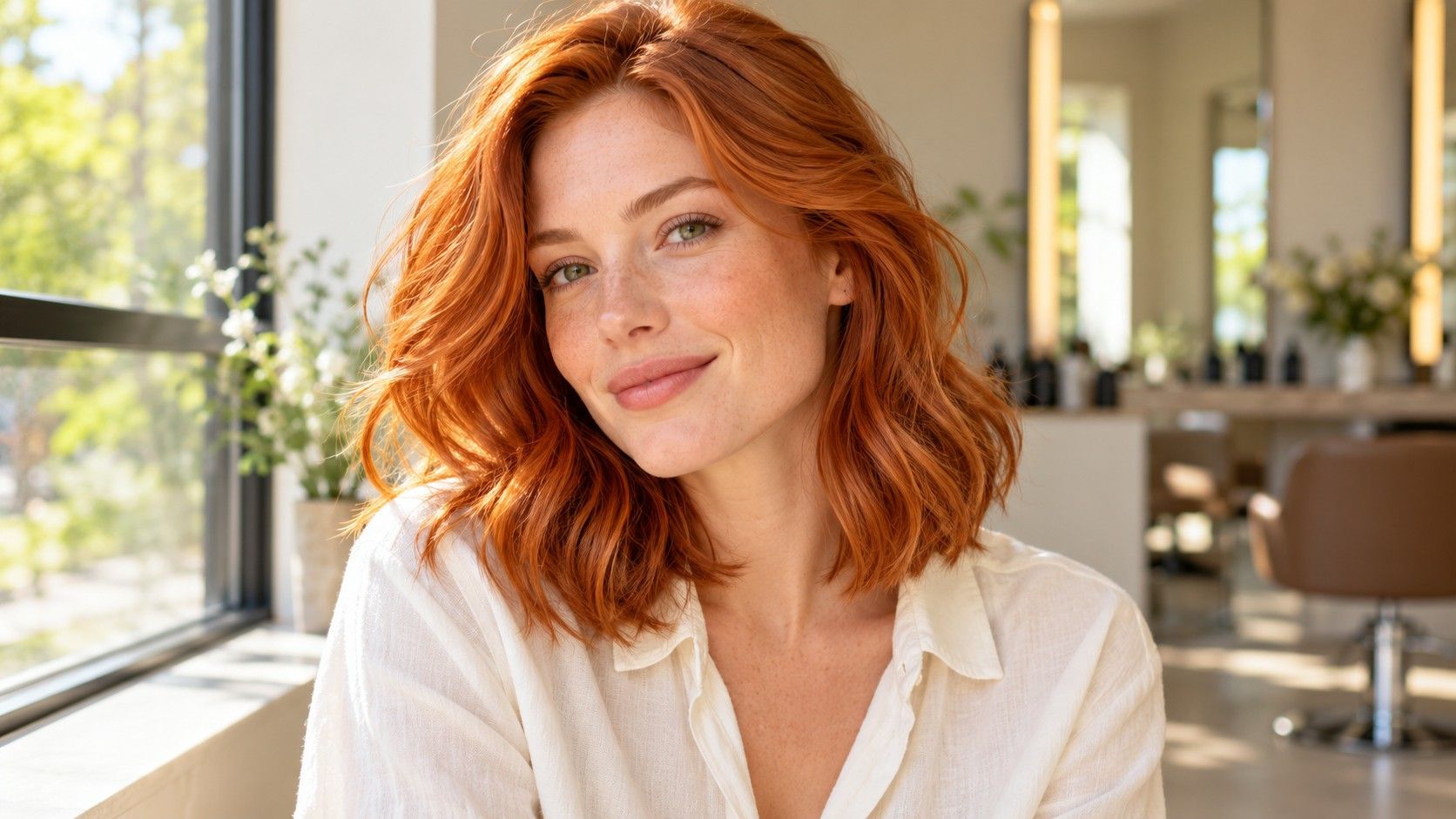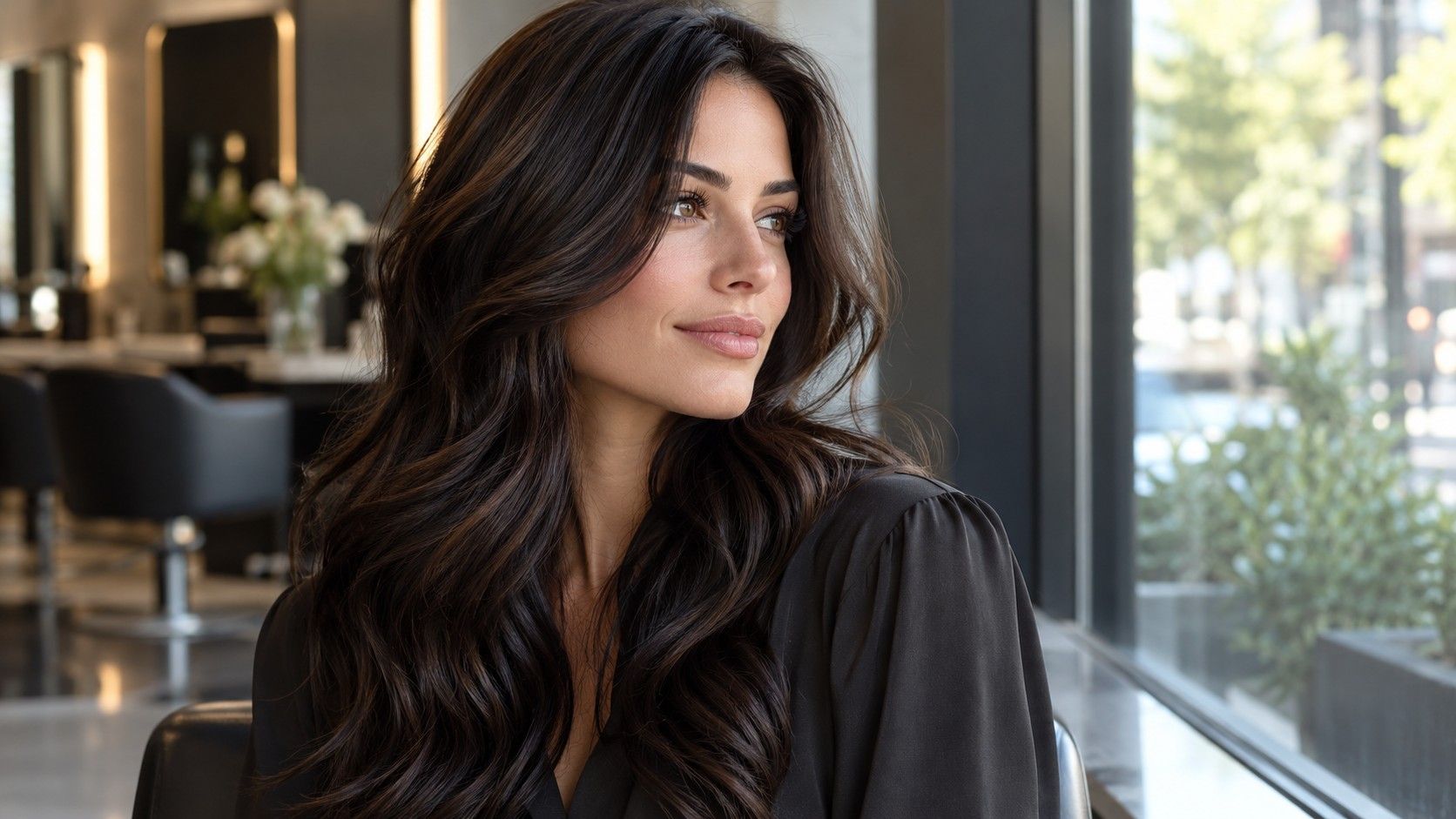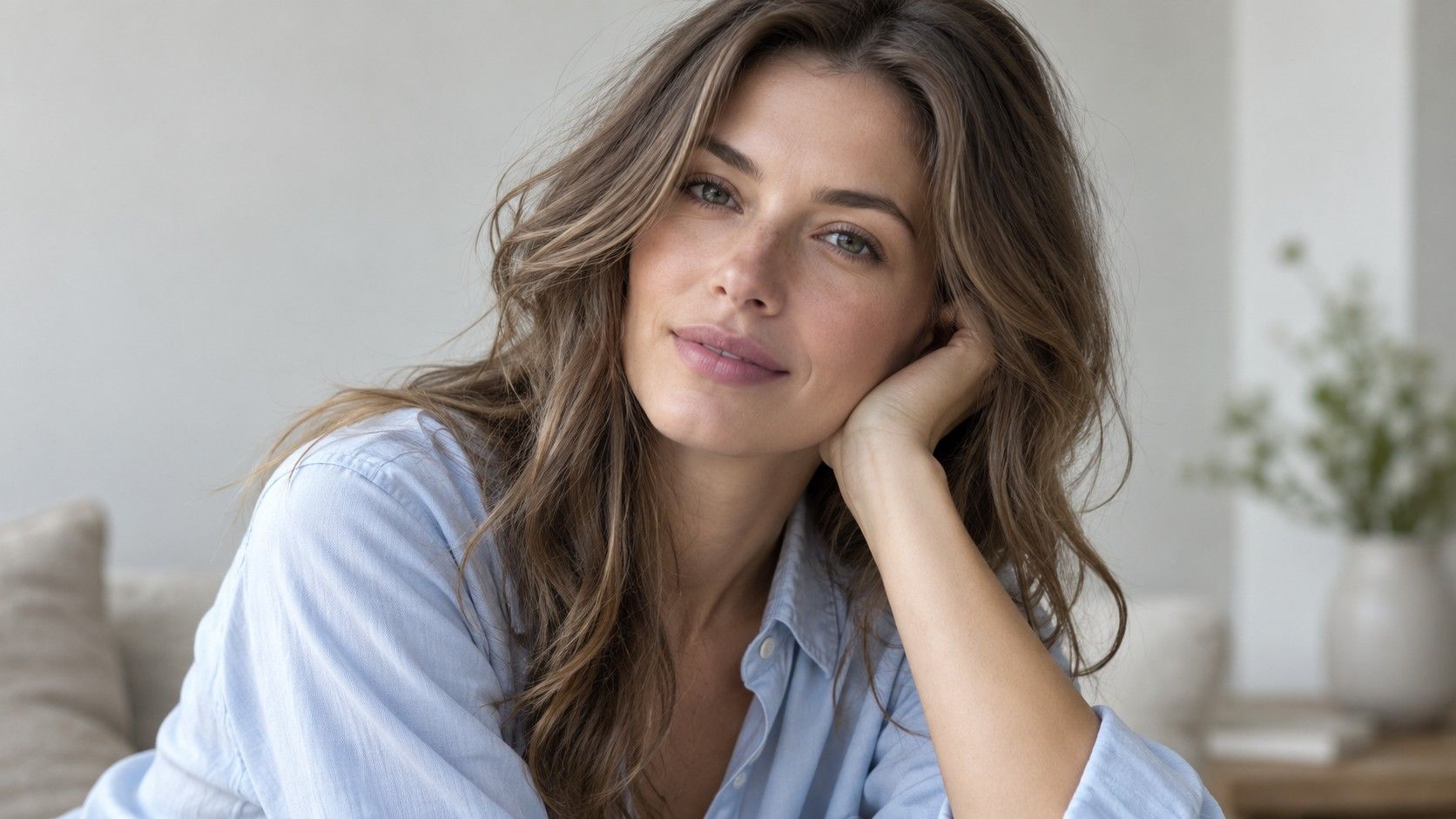
Soft summer hair color usually points toward muted, gently cool shades in seasonal color systems. That is a useful place to collect ideas, but it does not tell you which dye to buy. The better question is how much softness you want, where you need dimension and how the proposed shade compares with your actual roots.
Decide whether you want less warmth or less contrast
A photograph described as soft summer may show several things at once: an understated brown, fine highlights, soft lighting and a low-contrast outfit. Before saving it as your target, identify the feature you like. Is the brown less golden than yours? Are the lighter sections less obvious? Or is the model wearing a softer hairstyle? Those are different changes, even when the overall image feels calm.
Muted does not mean that every strand should be the same color. Hair with small variations in depth can look soft while retaining movement. An even overlay in a virtual preview may erase those variations and make a suitable shade look flat. Look for reference photographs where you can see the parting, hairline and several strands in daylight rather than a single heavily polished studio image.
I would compare two versions at the same depth before trying anything much darker or lighter. Put a neutral brown beside a slightly cooler, more muted brown. If the second feels comfortable but lifeless, you may want subtle dimension rather than stronger ash throughout. A seasonal label should help explain your preference; it should not overrule what you can see beside your own face.
Find your starting depth before choosing a muted shade
Look at natural regrowth in indirect daylight with the hair dry. Keep a record of the current roots and the lengths separately. A light brown root next to pale ends can appear darker than it really is. Your brows offer useful context for the overall contrast, but their color does not dictate a formula for the hair. Describe what you see in plain terms and let a colorist assess the technical level.
Gather your color history before discussing a change. Permanent brown dye, old highlights and recent toner may all be present on different areas of the same head. A muted reference cannot reveal how those areas will respond. Note approximate dates, any unknown products and sections that feel rough or fragile. This is especially useful when the new direction depends on lightening previously colored lengths.
If your natural depth already feels comfortable, include a candidate close to it. Softness might come from a quieter transition between the roots and highlights, or from changing the warmth of the ends. You need not become lighter to fit a soft summer palette. Moving farther from your starting point adds another decision about regrowth and condition, which deserves its own discussion.
Compare soft brown, dark blonde and lighter accents fairly
Choose references with similar exposure and a visible root area. A shaded outdoor brunette photograph and an indoor blonde photograph under a ring light do not make a fair pair. On your own picture, keep skin tone and brightness unchanged as you compare hair shades. If a preview changes your face or adds makeup, discard it from the serious shortlist.
| Direction to compare | What it can help you judge | Question for the consultation |
|---|---|---|
| Muted light or medium brown | Whether softer warmth suits your preferred depth | Can this direction work with the pigment already present? |
| Neutral or gently cool dark blonde | Whether a lighter outline feels balanced | How much lightening would my starting point require? |
| Fine lighter pieces within a brown base | Whether dimension gives enough change | Where would placement be visible in my usual hairstyle? |
| A similar base with blended roots | Whether reducing a strong transition solves the problem | How would the blend look as the hair grows? |
These are visual directions, not shade prescriptions. Terms such as mushroom brown and beige blonde can describe quite different results in different galleries. Keep the picture and explain the part you like: a muted overall impression, a softer hairline or light ends without a strong golden appearance. A name alone leaves too much room for interpretation.
Keep softness around the face without erasing definition
Pull the hair forward and examine the temples, cheeks and jaw. Then tie it back if that is how you wear it during the week. Fine lighter pieces can look discreet with loose waves but create a bright outline when the hair is pulled away from the face. Ask whether the placement still feels soft in both arrangements. A reference styled in only one way may hide that difference.
Check the shortlist beside your normal clothing and makeup. Dusty blue, grey or rose clothing may appear in soft summer inspiration, but use the clothes you actually own for the decision. A favorite navy shirt and a simple light top give a useful contrast. Keep your lipstick consistent so you do not mistake a makeup change for an improvement in the hair shade.
If a color seems to make your features disappear, examine the depth before abandoning the whole muted direction. The preview may have made everything too light or too uniform. Conversely, a darker base can supply definition without a stark black outline. The desired amount of contrast is personal. A palette convention cannot decide how bold or understated you want the finished look to feel.
Plan for the color between appointments
Ask what the proposed shade may look like after the initial tone changes with washing and everyday wear. A softly cool finish can require a different care plan from a result closer to your natural shade. There is no single maintenance schedule for soft summer hair. Your starting pigment, previous color and the chosen technique all affect the conversation.
Be specific about the practical limits. Mention how often you want to visit a salon, whether you swim and how much styling you normally do. Ask how visible the regrowth will be and what happens if you postpone an appointment. A close-to-natural base with selective dimension may offer a different pattern from an all-over change; have the colorist describe both for your particular hair.
Avoid adding a strong toning product simply because its label says ash or cool. Different unwanted tones require different decisions, and overdoing a correction can leave a result you did not intend. Use a care plan chosen for the actual service and ask how you will know when it needs adjusting. The goal is a shade you can live with, including its less polished weeks.
Bring a shortlist that explains softness in concrete terms
Select two preferred images and one example of an effect you do not want. For each, write a short observation: “gentle transition from the roots,” “dimension without pale stripes,” or “too grey through the ends.” Include an unfiltered daylight photograph of your current hair. A clear boundary often tells a colorist more than a folder full of pictures carrying the same seasonal caption.
Ask which part of the result is achievable with your existing dye and condition. A professional may need to assess a strand before committing to a large change. Agree on whether the priority is tone, depth or placement, then discuss the process and upkeep. If the reference involves all three, decide which one matters most rather than assuming they must be changed together.
You can leave the consultation with a revised direction and still have used the palette well. Soft summer is a vocabulary for exploring quieter color relationships, not a test you must pass. A good final choice should describe both a visible result you like and a practical route to maintaining it. Keep your notes so the next appointment builds on that decision.